

14 Feb Study Guide: Life Aboard Ship
Shanty Week Study Guide: Life Aboard Ship
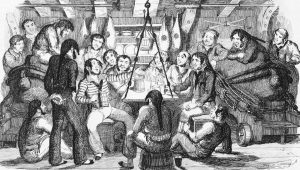
Life aboard ship
Life aboard a sailing ship in the early to mid-1800s was a stark contrast to modern travel. It was a world of hard work, strict discipline, cramped conditions, and constant danger. Here’s a glimpse into that world:
Daily Life and Work:
- Long Hours and Hard Labor: Sailors worked long hours in all weather conditions. Tasks included:
- Handling Sails: Adjusting and maneuvering the sails to catch the wind, a physically demanding and often dangerous task, especially in storms.
- Maintaining the Ship: Cleaning, scrubbing, repairing rigging, and caulking seams to keep the ship seaworthy.
- Keeping Watch: Standing watch in shifts, day and night, to monitor the ship’s course, look for hazards, and keep an eye on the weather.
- Strict Discipline: Life aboard ship was governed by strict rules and harsh punishments. Disobedience or negligence could result in flogging or other forms of corporal punishment.
- Routine: The day was typically divided into watches, with specific duties assigned to each watch. Meals were simple and often monotonous.
Living Conditions:
- Cramped Quarters: Sailors lived in cramped and often damp and poorly ventilated spaces below deck. Hammocks were the standard sleeping arrangement, providing little privacy or comfort.
- Poor Sanitation: Sanitary conditions were basic, with limited access to fresh water for washing. This contributed to the spread of disease.
- Food and Provisions: Food was often simple and preserved, such as:
- Salted Meat: Salted beef or pork was a staple, often tough and unappetizing.
- Hardtack: A hard, dry biscuit that could be infested with weevils.
- Other Provisions: Cheese, dried beans, and occasionally fresh food if the ship stopped at a port.
- Water: Fresh water was a precious commodity and was often rationed. It could become stale and contaminated during long voyages.
Dangers and Hardships:
- Storms and Shipwrecks: Sailing ships were vulnerable to storms, which could cause damage to the ship or even lead to shipwreck.
- Disease: Diseases like scurvy (vitamin C deficiency), typhus, and dysentery were common due to poor diet, sanitation, and close living quarters.
- Accidents: Working with ropes, sails, and heavy equipment in rough seas posed a constant risk of accidents and injuries.
- Isolation: Voyages could last for months or even years, separating sailors from their families and communities.
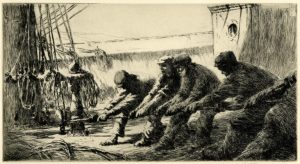
Social Life and Entertainment:
- Limited Social Interaction: While sailors lived in close proximity, social interaction was often limited by the strict discipline and the demands of work.
- Entertainment: In their limited free time, sailors might sing songs (including shanties), tell stories, play games, or engage in other forms of recreation.
Hierarchy and Roles:
- Captain: The captain had ultimate authority on board the ship.
- Officers: Officers were responsible for navigation, discipline, and overseeing the crew.
- Crew: The crew consisted of various ranks, including able seamen, ordinary seamen, and apprentices, each with specific duties.