

31 Mar Notes on the Program: Starstruck
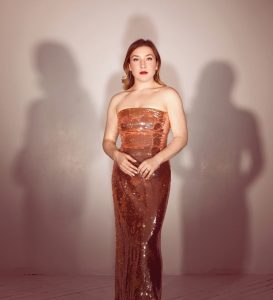 Soprano Hannah De Priest joins Les Délices for three performances of STARSTRUCK, April 24-26, 2026 in Akron, Cleveland Heights, and Rocky River. This all-Handel program includes brilliant instrumental works, favorite arias from Apollo e Dafne, and Silete venti, a stunning show-piece for soprano. Click here for tickets!
Program Notes For Starstruck:
There are many stars on and in this program. Some – like young Handel’s talent – shine brilliantly across the centuries; others – like soprano Hannah De Priest – are rising fast on the horizon; and still others – like the benigna stella referenced in the aria “Come in ciel” from Handel’s Apollo e Dafne or the North Star – offer such constancy that we can navigate by their true and unwavering light.
Starstruck is at once a celebration of the energy and charged emotions of Handel’s music and a celebration of our dear friend and colleague soprano Hannah De Priest. I first met Hannah when she arrived at CWRU to do a Master’s in Historical Performance. I was directing the university’s Collegium Musicum and Hannah ultimately became my teaching assistant – the best one I ever had. She was organized, earnest, hard-working, caring, and unafraid to try new things (even when that meant playing the recorder!). In the years since, Hannah’s voice has opened up in exciting ways and we’re seeing her hard work, raw talent, and heartfelt collegiality bear tremendous fruit. Hannah is truly a rising star on the national stage (having been named “Best New Artist” in the March 2026 issue of Musical America) and we’re thrilled to celebrate the release of her debut album Arcadian Dreams with this weekend’s performances.
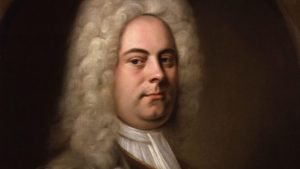
George Frederick Handel (1685-1759) was well on his way to international fame by his early 20s. In 1707 he allegedly bested the composer Domenico Scarlatti in a friendly competition, and he was compared to both Apollo (Greek God of music and poetry) and Orpheus (the famed musician with the power to enchant trees and stones, and tame wild animals) by some of the most important figures in Rome.
Handel literally overwhelmed Italian audiences with the vitality of his music. Recalling Handel’s reception in Venice, his early biographer John Mainwaring wrote: “The theatre, at almost every pause, resounded with shouts of viva il caro Sassone! and other expressions of approbation too extravagant to be mentioned. They were thunderstruck with the grandeur and sublimity of his style: for never had they known till then all the powers of harmony and modulation so closely arrayed, and so forcibly combined… ”
Perhaps because he wrote so much great music while very young, Handel’s reputation is little-sullied by his own propensity for recycling his best tunes. That being said, Handel likely played little to no part in the publication of Concerti Grossi and Trio Sonatas that brought together fragments and excerpts of his earlier works. Ultimately, Handel’s Op. 3 Concerti grossi (assembled in 1736 by publisher John Walsh) represents music from the composer’s first years in London. The modest orchestration of the Concerto in G major, Op. 3 no. 3 mirrors the small ensemble of violins and oboes that Handel worked with at Cannons, home to his early patron the Duke of Chandos. The concerto’s opening Largo and initial Allegro are from the Chandos Anthem no. 7 “My song shall be alway,” while the Adagio is lifted from an orchestral introduction in the 1718 Te Deum (HWV 281). The concerto’s boisterous final Allegro draws from a fugue for keyboard, HWV 606 composed around 1716.
Although not often heard today, Handel’s early Italian cantatas and motets pack the same emotional and musical punch as his larger operatic works. Handel began composing Apollo e Dafne or La terra è liberata in Venice in 1709 following the successful premiere of his opera Agrippina. Based on Ovid’s Metamorphoses, the cantata begins with the god Apollo boasting about his power having defeated the python. Glory-driven, impulsive, and manipulative, Apollo trains his eye (and Cupid’s arrow) on seducing the nymph Daphne. Daphne, however, refuses his advances and repeatedly calls upon reason, peace, calm, and liberty in her arias. Musicologist Wendy Heller has commented that the aria “Felicissima quest’alma” represents “pure, innocent Arcadia…celebrating freedom and happiness” as solo oboe and voice intertwine accompanied by pizzicato strings. Similarly, “Come in ciel benigna stella” compares “the calming effect of a kindly star on the fury of Neptune to the way in which reason restrains love in an honest and beautiful soul.”
As was the case with Handel’s Op. 3 Concerti Grossi, the Op. 5 Trio Sonatas were compiled and issued by John Walsh without Handel’s participation or consent. Nonetheless, the music is beguiling. The opening Andante features violins in conversation over a walking bass line whose regularity projects clarity and calm. By contrast, the following Allegro is a virtual fencing match that crackles with energy. Incidentally, both of these movements are lifted straight from Handel’s Chandos Anthem no. 5 I will magnify thee.
Handel’s Silete venti is truly the centerpiece of our program. Despite its Latin devotional text, the music is highly dramatic and utterly spectacular. Little is known about the piece’s origins, but scholars believe that it was composed in London around 1724 with the possible intention to be sent to Rome. Silete venti’s ecstatic text has echoes of Song of Songs. The motet begins with a brilliant concerto movement depicting rushing winds – that are stopped dead in their tracks by the entrance of the soprano.
– Debra Nagy