

26 Sep Blog Post: Bohemian Rhapsody composers
 Les Délices launches its 2025-26 Season “Metamorphosis” with three live performances of Bohemian Rhapsody (Oct. 17-19). This intimate, colorful chamber music program for oboe and strings celebrates little-known Bohemian and Moravian composers along with the Classical Era’s most enduring genius: Wolfgang Amadeus Mozart. Honoring self-expression and cultural difference, the program explores themes of separation, nostalgia, and homecoming through folk tunes and other traces of Czech cultural identity.
Les Délices will give three performances of Bohemian Rhapsody this October 17, 18, and 19th in Akron, Cleveland Heights, and Rocky River.
Who were the Bohemians?
When you hear the term “Bohemian Rhapsody” today, the first thing that probably comes to mind is Queen’s progressive rock anthem of the 1970s. Freddie Mercury’s iconic performance celebrated the “Bohemian” as a form of rugged, romantic, artistic individualism – in contrast to the term’s connotations in 19th century Paris, where it was used pejoratively as a label for the persecuted and displaced Roma people’s gypsy culture.
Comprising much of the west of today’s Czech Republic, Bohemia traces its history as a kingdom back to the 12th century. Bohemian Rhapsody celebrates the music of Bohemian composers from the late 18th and early 19th centuries – a time when Bohemia and Moravia were provinces of the Habsburg Empire, which resulted in cultural suppression as locals were forced to use the German language (including Germanizing names) and practice Catholicism or be deported.
More than a century of Habsburg occupation in Bohemia and Moravia also meant that limited job opportunities sent many Bohemian musicians/composers abroad for work to cities such as Mannheim, Berlin, and Naples (especially for aspiring opera composers) from the 1720s onwards. Other Bohemian artists took their artistry on the nascent international touring circuit as soloists like the horn player Jan Václav Stich (who changed his name to Giovanni Punto after escaping Count Joseph Johann von Thun, to whom his family was bonded as serfs) and virtuoso pianist Jan Ladislav Dussek, among others. Jan Dussek spent ten years in London, where he invited his sister Veronika to join him. An accomplished pianist, harpist, singer, and composer in her own right, Veronika performed regularly in London and her works were issued in print by the man who became her husband, publisher and importer Francesco Cianchettini.
The Imperial court in Vienna was another logical destination for Bohemian and Moravian musicians including František Kramář (Franz Krommer) and Jiří Družecký (Georg Druschetzky). A locus of activity for the international music publishing industry, success in Vienna also ensured that the influence of these displaced composers’ music could be felt across the continent and even across the Atlantic.
Meet the Composers for Bohemian Rhapsody
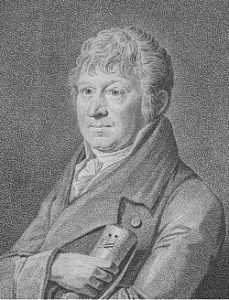 Bohemian Rhapsody opens with a quartet for oboe and strings by Krommer (1759-1831). The son of an innkeeper, Krommer (pictured left) studied violin and organ with his uncle in the tiny village of Tuřany near Brno. Krommer found work in Vienna and Simontomya (in present-day Hungary), absorbing the influence of Gluck, Haydn, and Mozart. Returning to Vienna in 1795, Krommer slowly but surely climbed the professional ranks to achieve the status of Imperial Court composer (succeeding fellow Bohemian Kozeluch, who himself succeeded Mozart) and Kapellmeister. Krommer also benefited from Vienna’s publishing industry such that his music was reprinted and arranged for publication in Denmark, France, England, Italy, and in the United States.
Though he composed prolifically in nearly every genre except for opera and solo song, Krommer is best known today for his chamber music for woodwinds and strings. Along with Haydn, Krommer was regarded as a leading composer of string quartets (he wrote 100 of them) and a rival of Beethoven. The Quartet in F major for oboe and strings feels fresh and spontaneous, and the melodic conversations between oboe and violin espouse an easy elegance. The final Rondo contrasts a folksy theme with quasi-operatic episodes.
Druschetzky (1745-1819) hailed from the village of Jemníky, which he left to study with the Italian oboe virtuoso Carlo Besozzi in Dresden. Not so dissimilar to today, the career prospects for an 18th century wind player included seeking an orchestral appointment or joining up with an army band. Druschetzky joined the armed services, ultimately serving as the band’s Kapellmeister. Retiring from the army, Druschetzky became a civic musician in Linz before moving to Vienna and entering the service of Count Anton Grassalkovics at Pressburg (Bratislava) where he provided music for the wind band.
It might sound like Druschetzky had a pretty conventional career but he was clearly a solution-oriented creative thinker. He cultivated a side-hustle as a “certified regional drummer,” playing for official events like parades and funerals – and then wrote some of the first concertos for timpani (as well as a concerto for oboe AND timpani!). In addition to writing 27 symphonies, 47 string quartets, operas, and masses, among his 150 partitas and serenades are original arrangements of Beethoven’s Pathétique Sonata, Haydn’s Creation, and Mozart’s Magic Flute for wind ensemble. For a variety of reasons, his music deserves to be better known.
Druschetzky’s Quartet in g minor for oboe and strings is remarkable in a few ways. First, minor keys are extremely rare for Classical-era works (particularly in so-called “lighter” genres with woodwinds). The brooding Adagio opening to the first movement, then, evokes the seriousness of a symphony while the propulsive rhythmic energy of the following Allegro echoes the intensity of Beethoven. Druschetzky further announces his serious intentions in the second movement Andante, which quite literally pays homage to Bach by using the melodic motif B-A-C-H (the pitches B-natural, A, C, and B-flat) as a source for variations. Like his proverbial role model, Druschetzky also uses the motif in retrograde (i.e. backwards). The last movement Allegro again crackles with energy that’s kicked off by a unison opening for all four instruments.
To hear this music by Druschetzky, Krommer, and more, get your tickets to Bohemian Rhapsody today! Season Subscriptions are also available now.
EVENT DETAILS:
Bohemian Rhapsody
Celebrating Czech culture & folk tunes in 18th Century chamber music
Live performances:
Friday, October 17, 2025 at 7:30 pm
Westminster Presbyterian Akron
1250 W Exchange St, Akron, OH 44313
Saturday, October 18, 2025 at 7:30 pm
Forest Hill Presbyterian Church
3031 Monticello Blvd, Cleveland Heights, OH 44118
Sunday, October 19, 2025 at 4:00 pm
West Shore Unitarian Universalist Church
20401 Hilliard Blvd, Rocky River, OH 44116
Pre-concert lecture at 3:15 pm